


Your Pillow Isn't the Only Reason You're Waking Up With Back Discomfort
Your Pillow Isn't the Only Reason You're Waking Up With Back Discomfort
If you've ever woken up with an aching back, your first thought might be that your mattress or pillow needs replacing. While bedding certainly plays a role in sleep comfort, it's rarely the only factor involved.
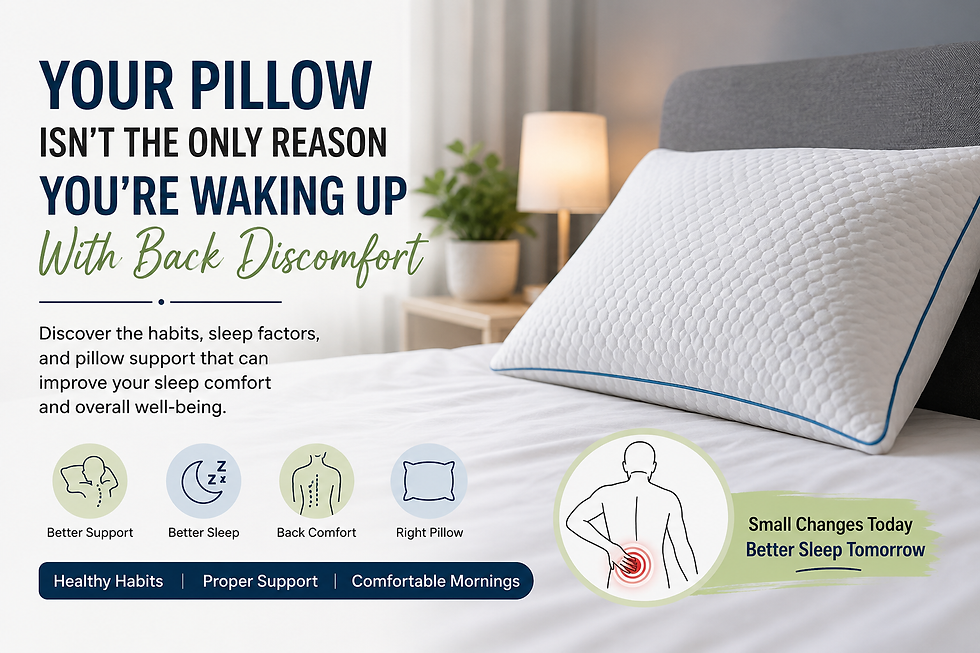
The quality of your sleep is influenced by a combination of daily habits, sleeping posture, bedroom environment, and the support your body receives throughout the night. Looking at the bigger picture often provides better answers than focusing on a single product.
Modern Lifestyles Are Changing the Way We Sleep
Many people now spend hours sitting in front of computers, working remotely, or using smartphones before bed. These habits can influence how relaxed your muscles feel when it's finally time to sleep.
Long periods of inactivity, irregular sleep schedules, and excessive screen exposure before bedtime may all affect sleep quality.
Small lifestyle changes often have a greater impact than many people expect.
Why Your Sleep Environment Matters
A comfortable bedroom isn't created by one product alone.
Several elements work together:
Bedroom temperature
Light exposure
Noise levels
Mattress condition
Pillow support
Sleeping position
When these factors are balanced, they help create a more relaxing place to rest.
Common Sleep Habits Worth Reconsidering
Sometimes it's the smallest habits that deserve the most attention.
You may want to review whether you:
Use electronic devices immediately before bed.
Sleep at different times each night.
Continue using bedding that has lost its support.
Wake up several times to adjust your pillow.
Spend most of the day sitting without movement.
None of these habits automatically cause back discomfort, but together they may influence how comfortable you feel after sleeping.
The Role of Pillow Support
A pillow supports far more than your head. It also contributes to how comfortably your neck and upper spine remain aligned throughout the night.
Different sleeping positions often require different levels of support. Choosing a pillow based only on softness may not provide the most comfortable experience over time.
If you're researching how to choose a pillow for back pain, understanding factors such as pillow loft, support, sleeping position, and material can help you compare options more effectively.
Better Sleep Starts Long Before Bedtime
Improving sleep comfort isn't only about replacing pillows or mattresses.
Simple habits can also contribute to a healthier sleep routine:
Follow a consistent bedtime schedule.
Stay physically active during the day.
Reduce screen time before sleeping.
Create a cool, quiet bedroom.
Replace bedding when it no longer feels supportive.
These changes may seem small individually, but together they help build a sleep environment that's more comfortable and relaxing.
Final Thoughts
Morning back discomfort doesn't always have a single explanation. More often, it's the result of several everyday factors working together.
Taking a closer look at your sleep routine, bedroom setup, and bedding can help you make informed decisions that support better sleep over time. Rather than searching for a quick fix, focus on creating healthy habits that contribute to long-term comfort.


Comments