


Why Do You Wake Up Tired Even After 8 Hours of Sleep?
Have you ever looked at the clock, realized you slept for eight hours, and still felt exhausted? Sleep problems are more common than many people realize, and they don't always mean you're sleeping too little. In many cases, the issue is poor sleep quality rather than the number of hours you spend in bed.
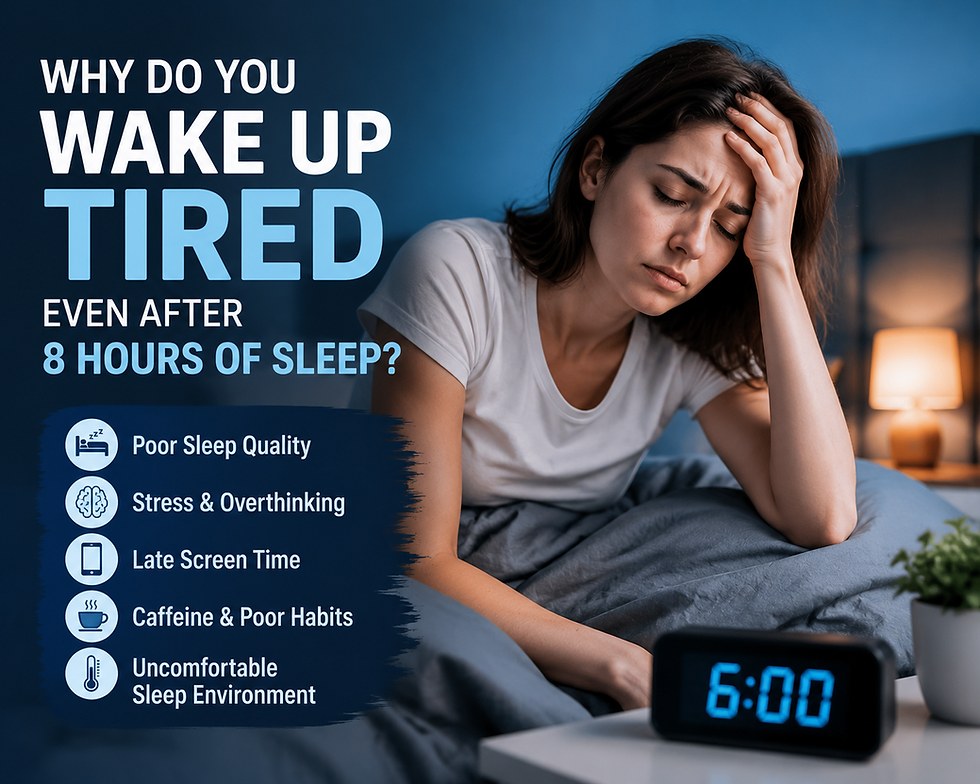
Many people blame stress, work, or an old mattress. While those factors can certainly play a role, your daily habits and sleep environment may also have a significant impact. Understanding what affects your sleep is the first step toward waking up feeling refreshed.
Sleep Quality Matters More Than Sleep Duration
Getting enough sleep is important, but quality matters just as much as quantity.
Your body moves through different sleep stages every night. Deep sleep is when your body repairs muscles, restores energy, and supports overall health. If your sleep is interrupted frequently, you may not spend enough time in these restorative stages.
That's why some people wake up feeling tired even after spending eight hours in bed.
Your Evening Routine Could Be Working Against You
Small habits before bedtime can have a bigger impact than you might expect.
Common habits that may affect sleep include:
Using your phone or laptop before bed
Drinking coffee or energy drinks late in the day
Eating heavy meals close to bedtime
Going to bed at different times every night
Keeping your bedroom too warm or too bright
Improving these habits doesn't require a major lifestyle change. Small adjustments often lead to noticeable improvements over time.
Is Your Sleep Environment Comfortable?
Your bedroom should help you relax, not keep you awake.
A comfortable mattress, supportive pillow, breathable bedding, and a cool, quiet room all contribute to better sleep quality. Even reducing noise or dimming the lights before bedtime can help create a more relaxing environment.
Many people focus on expensive sleep products while overlooking these simple improvements.
When Sleep Problems Become a Pattern
Everyone experiences an occasional restless night.
However, if you regularly struggle to fall asleep, wake up several times during the night, or feel exhausted every morning, it may be time to learn more about possible causes.
While researching this topic, I came across a helpful guide about sleep problems that explains common sleep issues, possible contributing factors, and practical habits that can support healthier sleep. It's a useful resource for anyone looking to better understand why quality sleep matters.
Five Simple Habits for Better Sleep
You don't need expensive gadgets to improve your sleep.
Start with these simple habits:
Follow a consistent bedtime schedule.
Keep your bedroom cool and comfortable.
Limit screen time before going to bed.
Avoid caffeine late in the evening.
Create a relaxing bedtime routine.
These small changes may not produce overnight results, but they can help improve sleep quality over time.
Don't Ignore Long-Term Sleep Problems
Occasional poor sleep is normal.
But if sleep difficulties continue for weeks or months, they can affect your mood, concentration, productivity, and overall well-being.
Paying attention to your sleep habits today may help prevent bigger issues later. If your symptoms become frequent or severe, it's important to seek advice from a qualified healthcare professional for proper evaluation and treatment.
Final Thoughts
Better sleep doesn't always require expensive products or complicated routines.
Often, improving your sleep starts with understanding what may be affecting it in the first place.
By creating a consistent bedtime routine, improving your sleep environment, and making healthier daily choices, you can build habits that support more restful nights.
If you're experiencing ongoing sleep problems, don't ignore the signs. Small, consistent improvements today can help you wake up feeling healthier, more energetic, and ready for the day ahead.



Comments