


How to Choose a Body Pillow for Your Sleeping Style
Have you ever chosen a pillow because it looked comfortable, only to find that it does not work well once you are actually in bed? The same thing can happen with a body pillow. A long, soft pillow may sound appealing, but length alone does not tell you whether it will fit your sleeping habits.
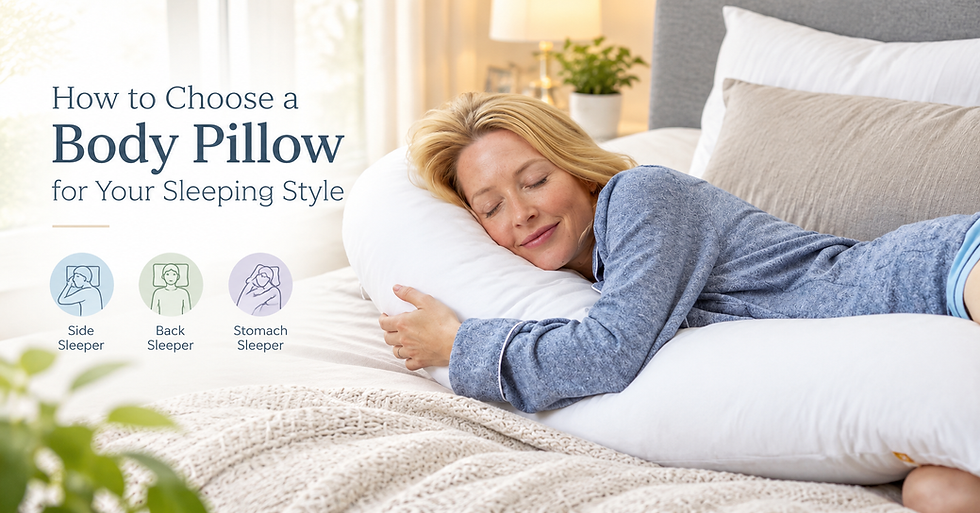
The better approach is to think about how you naturally sleep. Do you stay mostly on your side, move around during the night, prefer something firm to hold against your body, or simply want extra cushioning between your legs? Your answers can help determine the pillow size, shape, filling, and overall feel that makes sense for you. Choosing a Body Pillow becomes less about finding a universal "best" option and more about finding a design that fits the way you actually use it.
Start With the Way You Actually Sleep
Before comparing materials or pillow dimensions, pay attention to your usual sleeping position.
Someone who spends most of the night on their side may use a body pillow differently from someone who frequently changes positions. A side sleeper might place the pillow between their knees or legs, hug it against their upper body, or use both positions at different times.
If you move frequently, a very large pillow may feel cumbersome when you turn. A more manageable shape could be easier to reposition. On the other hand, someone who stays in one position for longer periods may appreciate having more of the pillow available for consistent contact.
There is no single sleeping position that determines the right choice. The goal is to notice what your body naturally does at night rather than choosing based solely on product descriptions.
For readers exploring how sleeping position can affect pillow decisions, this discussion of sleep problems and pillow choice for side sleepers provides useful context.
Think About Pillow Length and Shape
A full body pillow and a shorter pillow can create very different experiences.
A long body pillow can provide more surface area to hug or place between the legs. That may appeal to people who like having one pillow serve several purposes. However, more length is not automatically better. If the pillow takes up too much space, it may become difficult to move around or fit comfortably alongside your other pillows.
Shape matters too. Some sleepers prefer a straightforward rectangular design because it is easy to position in different ways. Others may prefer a more specialized body pillow design that stays oriented in a particular position.
Consider your bed size as well. A pillow that seems appropriately sized in isolation can feel very different once it is placed beside your regular pillow, blanket, and sleeping partner.
Consider the Feel and Filling
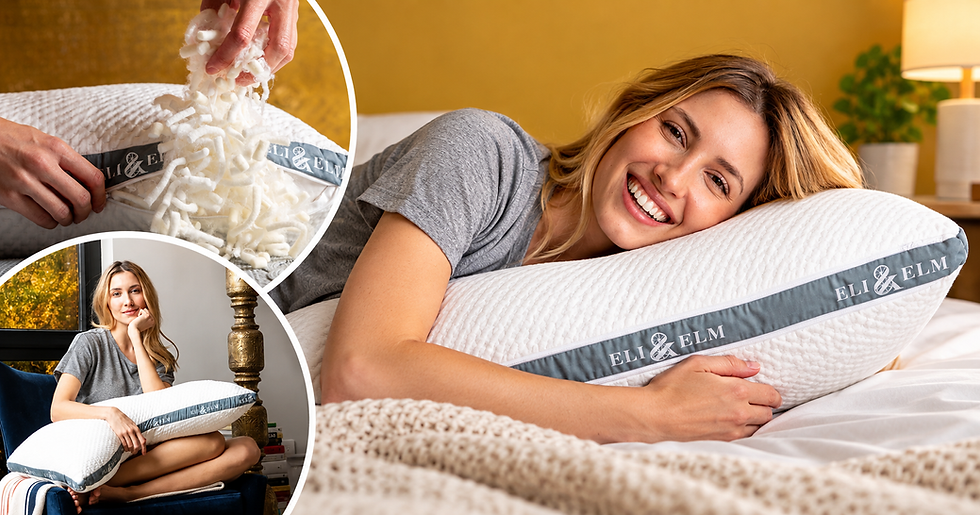
Pillow filling influences how a body pillow feels when you hug it, place your legs against it, or shift it during the night.
Some people prefer a softer, more compressible feel. Others want a firmer surface that maintains more of its shape. Neither preference is automatically better. What matters is whether the pillow's construction matches how you like to use it.
Filling can also affect how easily a pillow can be repositioned. If you regularly move your pillow from beside your legs to your upper body, you may want something that is easy to handle rather than a design that feels difficult to shift.
This is also where marketing language can become misleading. Words such as "supportive" or "premium" do not explain how a pillow will actually feel to you. Look instead at practical details such as construction, filling, dimensions, and intended use.
How Your Sleeping Position Changes the Experience
The same body pillow can feel completely different depending on how you use it.
For a side sleeper, placing a pillow between the legs can create a different comfort experience than hugging it against the chest. Someone who alternates between side and back sleeping may use the pillow mainly as a comfort accessory rather than keeping it in one fixed position.
Pillow height can matter here as well. If you prefer to hug a pillow while sleeping on your side, its thickness and shape can influence how natural that position feels.
If neck and shoulder comfort is part of your pillow-selection process, you can also read about side sleeper pillow and neck and shoulder comfort for a more focused look at those considerations.
The important point is that sleeping position should be treated as a starting point, not a strict formula. Your preferred pillow height, firmness, and shape may differ from someone else who sleeps in the same position.
Look Beyond the Word "Supportive"
"Supportive body pillow" sounds useful, but support can mean different things to different sleepers.
For one person, support may mean having something firm enough to hold between the legs. For another, it may mean a pillow that remains comfortable when hugged for extended periods. Someone else may simply want a stable surface that does not flatten too quickly during normal use.
Think about the areas where you want physical contact and how you want the pillow to respond when pressure is applied. Does it compress easily? Does it retain its general shape? Can you move it without much effort?
These questions provide more useful information than a broad claim that a pillow is simply "supportive."
Consider How the Pillow Fits Into Your Routine
A body pillow does not exist separately from the rest of your bedtime setup.
Think about where your regular pillow sits, how much room you have on the mattress, whether you share the bed, and how you arrange your blankets. A pillow that works well on its own may be less convenient if it constantly gets in the way of everything else.
Your habits during the night matter, too. If you frequently sit up to read, change positions, or get out of bed, consider whether the pillow can be moved and returned easily.
For a broader look at how a pillow can fit into an everyday sleep setup, this guide to everyday pillow comfort offers another useful perspective.
A Simple Body Pillow Checklist Before Choosing
Before choosing a body pillow for adults, ask yourself:
Where will I use it? Between my legs, against my upper body, or both?
How much do I move? A frequent position changer may prefer easier repositioning.
How much space do I have? Consider the mattress, other pillows, and sleeping partners.
What feel do I prefer? Soft and compressible, firmer, or somewhere in between?
What size makes sense? A long body pillow offers more coverage, but it also takes up more space.
What shape feels practical? Choose based on how you expect to position it, not just how it looks.
Does the construction match my preferences? Look at the filling, dimensions, and overall design rather than relying on labels.
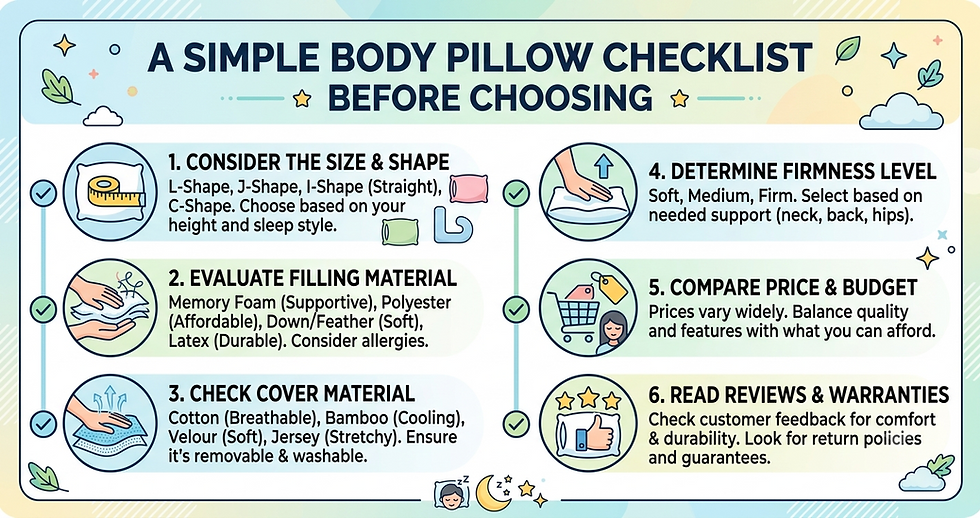
Once you understand these preferences, you can evaluate individual options more thoughtfully. For example, the Body Pillow can be considered alongside these practical factors rather than simply judged by its size or appearance.
Conclusion
Choosing a body pillow is ultimately a personal comfort decision. The longest pillow, softest filling, or most heavily marketed design may not be the right fit for every sleeper. Your sleeping position, movement during the night, available space, preferred firmness, and the way you like to use a pillow all matter.
Instead of asking which body pillow is universally best, ask a more useful question: Which pillow characteristics fit the way I actually sleep? That shift can make it easier to compare options and create a bedtime setup that feels natural to you.
Comments