


Why Pillow Contour and Edge Design Matter for Side Sleepers
When choosing a pillow, many people focus on familiar features such as softness, firmness, filling, or price. However, the overall shape of a pillow can also influence how it feels during sleep. For people who spend much of the night on their side, details such as contour, edge design, and surface structure may be especially worth considering.

A pillow is not simply a soft surface for the head. Its shape determines how it interacts with the head, neck, shoulder, and mattress. Understanding these design elements can help shoppers make more informed decisions without relying only on marketing claims or appearance.
What Does Pillow Contour Mean?
Pillow contour refers to the shape and profile of a pillow. Some pillows have a traditional flat, rectangular design, while others feature curved surfaces, raised edges, central depressions, or shaped support zones.
These design differences can affect how the head rests on the pillow. A contoured pillow may be designed to create a more structured sleeping surface, while a traditional pillow may offer a more uniform feel across its entire area.
Neither design is automatically suitable for everyone. The right choice depends on the sleeper’s body shape, preferred position, mattress, and personal comfort preferences.
Why Shape Matters More for Side Sleepers
When a person sleeps on their side, the head is positioned above the mattress while the shoulder rests against the bed surface. This creates a space that the pillow needs to accommodate.
A pillow’s contour can influence how the head is positioned within that space. If the shape does not suit the sleeper, they may feel the need to fold, bunch, flatten, or repeatedly adjust the pillow during the night.
For this reason, people searching for a side sleepers pillow may want to examine more than the product’s softness or advertised firmness. The overall shape, support zones, and construction can all influence how the pillow feels during regular use.
Understanding Raised Edges and Central Support
Some pillows use a contoured design with raised areas and a lower central section. This structure may help create a defined resting area for the head while offering additional support around it.
However, the usefulness of this design depends on how the sleeper’s head and neck interact with the pillow. A contour that feels comfortable to one person may feel too pronounced or restrictive to another.
Before purchasing, consider whether the product description clearly explains its shape and intended use. Product photographs can provide an initial impression, but they may not fully communicate how the pillow feels when someone is lying on it.
Edge Design and Sleeping Stability
The edges of a pillow can also influence the sleeping experience. A pillow with a structured edge may feel different from one with a soft, collapsing perimeter.
For side sleepers, edge stability may be relevant because the head can rest closer to one side of the pillow. If the edge compresses quickly, the pillow may feel different from its original shape. If the edge is highly structured, it may provide a more defined surface but could feel less flexible for people who change positions.
The goal is not necessarily to find the hardest or most rigid edge. Instead, shoppers should consider whether the design provides a comfortable balance between structure and flexibility.
Contour Is Not the Same as Firmness
Contour and firmness are related but different features. Contour describes the physical shape of the pillow, while firmness describes how resistant the material feels when pressure is applied.
A contoured pillow can have a soft surface, and a traditionally shaped pillow can be firm. Two pillows with similar firmness levels may also feel very different because their shapes and internal constructions are not the same.
This is why choosing a pillow based on a single label may be misleading. A more useful evaluation considers shape, material, height, compression, and the way the pillow behaves under the head.
For a broader guide to evaluating product information, see How to Evaluate Sleep Product Claims Before Making a Purchase.
Consider How the Pillow Works With Your Mattress
A pillow does not function separately from the mattress. Mattress firmness affects how far the shoulder sinks into the surface, which can change the distance between the head and the bed.
A pillow contour that feels suitable on one mattress may feel different on another. This is one reason personal testing, where available, can be useful. Shoppers should consider the complete sleep setup rather than judging a pillow in isolation.
Shoulder width, mattress firmness, and body proportions are important parts of this evaluation. For more detail, read Why Shoulder Width Matters When Choosing a Pillow for Side Sleeping.
Pay Attention to Movement During the Night
Most people do not remain perfectly still while sleeping. A side sleeper may turn from one side to the other or spend part of the night on their back.
A highly shaped pillow may feel supportive in one position but less comfortable when the sleeper changes position. On the other hand, a pillow with a more flexible design may accommodate movement more easily.
Think about your normal sleeping habits before choosing a pillow. If you remain on your side for most of the night, a design intended for side-sleeping support may be worth exploring. If you frequently change positions, flexibility and adaptability may be equally important.
Evaluate the Pillow During Everyday Use
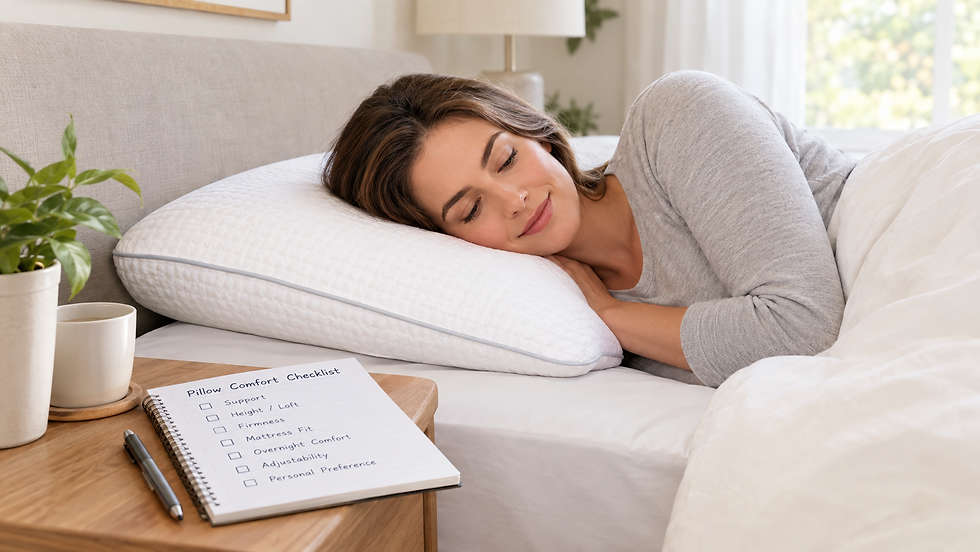
A pillow’s appearance can be useful, but real-world comfort depends on how it behaves over time. When evaluating a new pillow, consider the following questions:
Does the shape remain reasonably consistent during use?
Does the pillow compress more than expected?
Does the contour feel comfortable in your usual sleeping position?
Do you frequently need to adjust or reshape it?
Does the pillow work well with your mattress and bedding?
Is the cover easy to remove and care for?
Does the product information clearly explain its construction?
These questions can help you make a practical decision instead of choosing a pillow only because it looks innovative.
You can also review What to Look for in a Pillow for Everyday Use for additional considerations related to shape, construction, maintenance, and daily comfort.
Final Thoughts
Pillow contour and edge design can influence how a pillow feels, particularly for people who sleep on their side. Shape affects the resting surface, edge structure can influence stability, and material compression can change the pillow’s effective support during the night.
There is no single design that works equally well for every sleeper. The most useful approach is to consider your sleeping position, body proportions, mattress, movement habits, and personal comfort preferences together.
Rather than choosing a pillow based only on a promotional label, examine its construction and intended use. A thoughtful evaluation can help you select a sleep product that fits your individual needs more realistically.
Comments